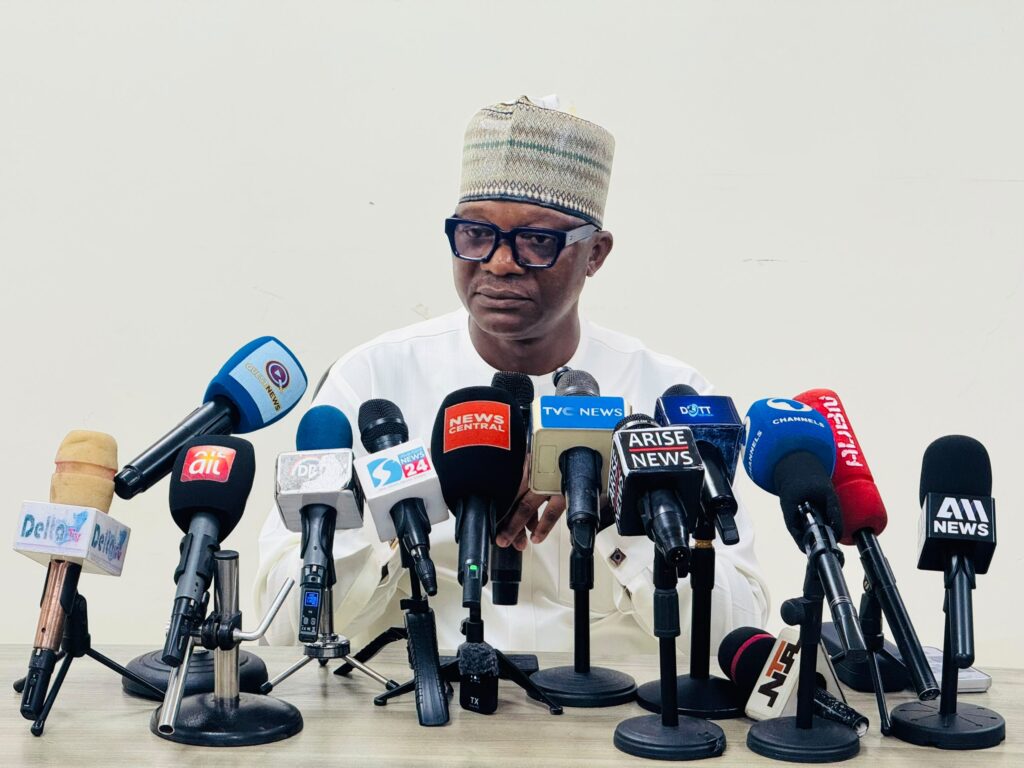
Mr Charles Aniagwu, Delta State Commissioner for Works (Rural Roads) and Public Information
Delta State Government has said its ongoing economic reforms and empowerment initiatives are designed to boost the purchasing power of residents, stimulate grassroots economic activities and accelerate the state’s recovery from current economic challenges.
The State Commissioner for Works (Rural Roads) and Public Information, Mr Charles Aniagwu, disclosed this on Friday at a press briefing in Asaba, saying Governor Sheriff Oborevwori’s administration was committed to ensuring that the benefits of its reforms were directly felt by the people, particularly low-income earners and operators of nano businesses.
Aniagwu said the directive to councillors across the state to empower 200 persons in their respective wards was part of measures to strengthen purchasing power and enable small businesses to survive and expand.
According to him, with about 500 wards in the state, the initiative would benefit no fewer than 100,000 people and inject about N5 billion directly into the grassroots economy.
He added that political and community leaders had also complemented the initiative with additional interventions during empowerment programmes.
He cited Ika North-East as an example, where leaders contributed at least N5 million in each federal ward, resulting in an additional injection of about N70 million into the local economy, alongside the funds provided by councillors.
The commissioner said strengthening purchasing power was critical to attracting and retaining investments, noting that businesses required a population with sufficient capacity to patronise their products and services.
He observed that investors often preferred urban centres because of their relatively higher purchasing power, stressing that improving economic capacity in rural communities would help spread investment and business opportunities across the state.
Aniagwu said the broader economic reforms of the President Bola Tinubu administration had also produced improvements at the macroeconomic level, citing the state’s ability to mobilise contractors up to 40 per cent, pay workers’ salaries and emoluments between the 22nd and 25th of every month, and ensure that pensioners no longer queue at Government House for payment.
He also highlighted the stability of academic activities in Delta-owned universities, saying the improved financial situation had contributed to a more stable academic calendar and was helping to secure a better future for students.
These developments, he said, were products of reforms aimed at strengthening the state’s financial position and ensuring prudent management of resources.
On the recently passed 13th-month salary bill, Aniagwu commended the Delta State House of Assembly for expediting consideration of the executive bill, saying the measure would institutionalise payment of a 13th-month salary to civil servants once assented to by the governor.
The commissioner said the 13th-month salary and other interventions were not merely election-related measures, but part of a broader strategy to boost purchasing power, stimulate consumption, encourage businesses, ease pressure on households and create an environment capable of attracting more investments.