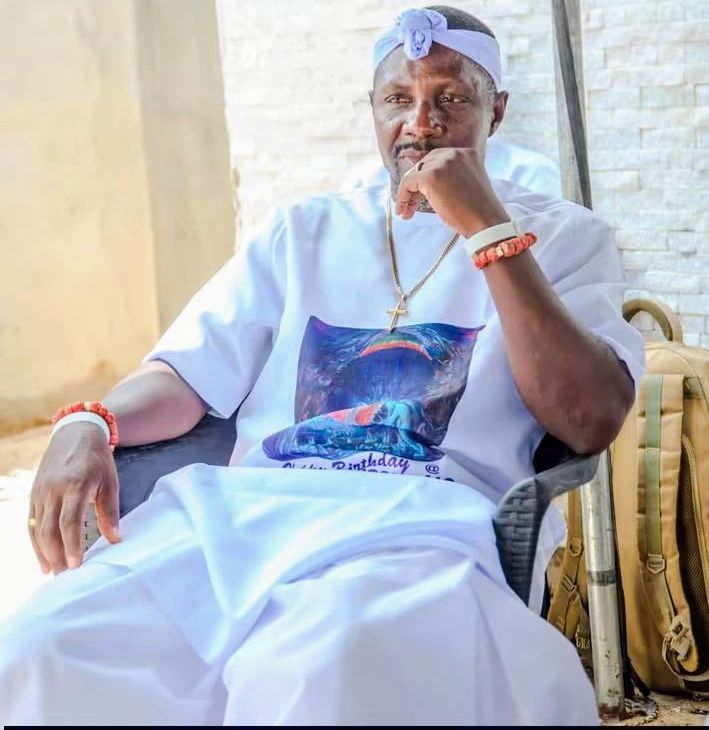
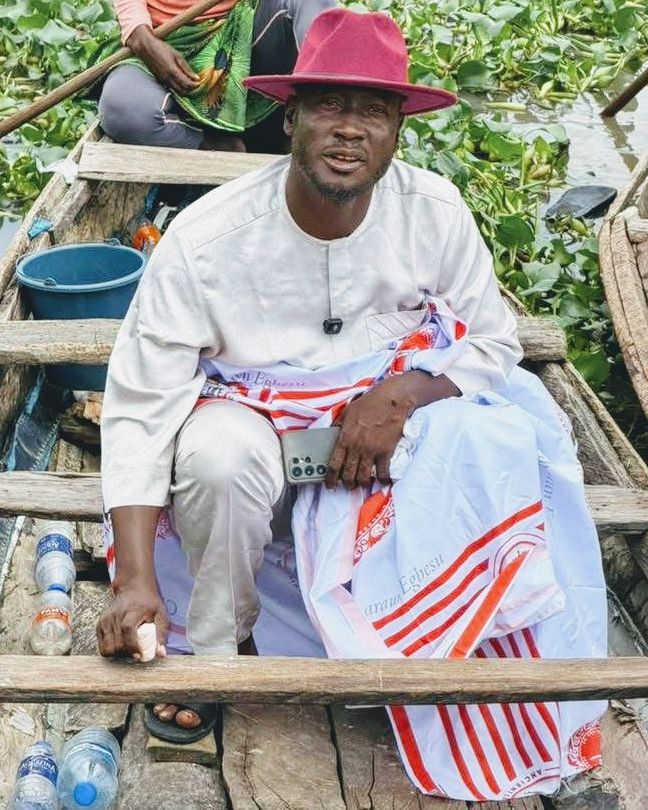
Do Not Demonise Tompolo: Understanding Egbesu Our Cultural Heritage And Spiritual Identity of The Ijaw Nation.
By: Asiayei Enaibo
Dear Daniel Ezekiel,
I am writing this open letter in response to the publication you made in Tarakiri Voice Newspaper on the 22nd of August on Facebook concerning Chief Government Ekpemupolo, popularly known as Tompolo, particularly your comments about his cultural background, worship, and practice of Ijaw spirituality.
As an Ijaw cultural journalist and student of our oral traditions, I believe it is necessary to separate personal disagreements from the collective cultural identity of an entire people.
For generations, Ijaw people have maintained rich systems of spirituality, ancestral consciousness, ritual practice, kingship, music, symbolism, and communal responsibility. Within the tradition you have spoken about, Egbesu occupies a profound spiritual and cultural place. To many Ijaw people, Egbesu represents blessings, justice, peace, protection, and the spiritual consciousness of the people.
Across the Ijaw kingdoms, our traditional institutions have preserved different expressions of this spiritual heritage. From one kingdom to another, the custodianship of sacred traditions has historically been connected to kings, priests, elders, and designated custodians. These practices cannot simply be dismissed as evil because they are different from another person’s religious understanding.
Tompolo was born into this cultural environment and, in recent years, has become one of the most visible figures associated with the revival and public expression of Ijaw cultural consciousness. Whatever anyone’s personal opinion of him may be, his cultural activities should not automatically be interpreted as evidence of evil or demonic worship.
I write this response to your publication with a deep sense of responsibility as an Ijaw cultural journalist and storyteller. My intention is not to attack you personally, but to challenge what I consider a serious misrepresentation of Ijaw spirituality and cultural identity.
Egbesu is spoken words. Egbesu is not a shrine. Egbesu is the beginning. Egbesu is the water we drink, Egbesu is the stream of oil that flows in our creeks, Egbesu is our God of war, Justice and development.
Egbesu is understood within Ijaw spirituality as the soul father and soul mother of our spiritual consciousness. There is no Ijaw without Egbesu, and there is no Egbesu without Ijaw. It is part of the guiding force through which many Ijaw people understand their existence, prosperity, protection, justice, peace, and relationship with the spiritual world.
Egbesu is the beginning and the end of the Ijaw people’s spiritual consciousness. It is not something that can simply be reduced to a physical shrine or compared casually with another person’s religious understanding.
Across the Ijaw kingdoms, different traditional institutions preserve and express this spiritual heritage. Egbesu occupies an important place in that cultural consciousness, with traditional authorities and custodians playing roles in its preservation and practice. Offerings, including the offering of rams during thanksgiving and traditional ceremonies, must be understood within their cultural and spiritual context.
For us, these practices are not expressions of evil. They are expressions of identity, gratitude, ancestral consciousness, and spirituality.
The revival of Ijaw cultural consciousness in the contemporary period has also been associated by many people with prominent figures who have encouraged greater confidence in our traditions and history. Tompolo has become one of the most visible figures associated with this cultural revival, and his supporters regard him as a major custodian and symbol of Egbesu spirituality.
This is why I take exception to the attempt to associate Ijaw spirituality with evil.
When you condemn the spiritual traditions of the Ijaw people without understanding their historical and cultural foundations, you are not merely criticizing one individual. You are making a statement about an entire people, their ancestors, traditional rulers, priests, cultural custodians, and generations that have preserved these traditions.
From the historical Ijaw kingdoms and communities—from Gbanran Bayelsa State to Furupa in Ondo state to Olodiama in Edo state, to Egbema, Arogbo, Gbaramatu in Delta state and the wider Ijaw territories—our people have maintained systems of traditional authority and spiritual consciousness that deserve serious study and respect. Ekeremor Egbesu, there is one Egbesu and one Ijaw nation.
Our ancestors did not leave us an empty cultural space.
They left songs.
They left drums.
They left stories.
They left sacred institutions.
They left kingship.
They left rituals.
They left a philosophy of existence.
They left us Egbesu
Therefore, Daniel Ezekiel, I appeal to you to retrace your steps and reconsider your words.
You are an Ijaw son. You come from a people whose cultural identity is connected to the very traditions you appear to condemn. You may disagree with Tompolo. You may disagree with his political activities, his interpretation of culture, or his public role. That is your right.
But do not turn that disagreement into a condemnation of the spiritual heritage of the Ijaw people where he serve as the Spiritual Grand master.
Our traditional institutions deserve respect.
Our elders deserve respect.
Our kings and traditional custodians deserve respect.
And our ancestral heritage deserves to be discussed with knowledge rather than contempt.
I also urge you to understand that criticism of traditional spirituality should be approached intellectually and culturally, rather than through labels, frustrations that automatically describe unfamiliar practices as evil.
The fact that another religious tradition has different beliefs does not make the Ijaw spiritual system inherently evil.
The Ijaw people have their own cultural history, just as other major ethnic groups in Nigeria have theirs.
Egbesu is our beginning. Egbesu is part of our consciousness. Egbesu is part of the story of who we are.
Let us therefore be careful about the words we use when discussing the spiritual heritage of our ancestors.
I say this not as a threat, but as a solemn cultural appeal: retrace your steps and approach our ancestral heritage with respect.
The spiritual world should not become a weapon in our disagreements with one another. Neither should our cultural identity become a battlefield between Ijaw sons and daughters.
If you have concerns about a particular practice, identify the practice.
If you have evidence of wrongdoing, present the evidence.
But do not condemn the totality of Ijaw spirituality because of your disagreement with one person.
Our ancestors deserve better.
Our children deserve better.
And the future generations of the Ijaw people deserve to inherit a culture that we have studied, documented, debated, and preserved—not one that we have destroyed through ignorance and internal division.
Retrace your steps, Daniel Ezekiel. Let us disagree as brothers without condemning the soul of the people we both belong to.
Egbesu is the beginning. Egbesu is the guiding consciousness. Egbesu is deeply woven into the spiritual identity of the Ijaw people.
Our history teaches us that cultural identity has often been central to political consciousness. From the era of Isaac Boro and the struggle for Niger Delta self-determination to contemporary conversations about resource control, environmental justice, development, and the rights of oil-producing communities, the question of identity has remained important.
The modern Niger Delta struggle has produced different generations of leaders and intellectuals. Each generation has contributed something to the continuing conversation about justice, resource control, development, and the dignity of our people.
Therefore, Ezekiel, if you have personal disagreements with Tompolo, address Tompolo. And Dr. Tompolo cannot have a personal disagreement with you as the father of Ijaw Nation.
If you disagree with his political philosophy, address his politics. If you disagree with his methods, discuss those methods. But please do not condemn the spirituality, traditions, and cultural heritage of the Ijaw people because of your disagreement with one individual.
The Yoruba have their mythology and traditional religious systems. The Igbo have their own cultural histories and spiritual traditions. The Ijaw also have ours. Cultural diversity does not make one people inferior to another.
Our drums are not automatically demonic. Our traditional songs are not automatically evil. Our festivals, prayers, offerings, thanksgiving ceremonies, sacred objects, and traditional institutions must be understood within their cultural context before judgment is passed upon them.
It is also important to understand that traditional thanksgiving and offerings should not be carelessly described as human sacrifice when there is no evidence of such a practice. Making such accusations against an entire cultural tradition is a serious matter.
If you have concerns about a particular ritual or practice, identify it specifically and discuss it responsibly. Do not use one individual’s activities as a basis for condemning an entire people.
For many Ijaw people, returning to their cultural roots has produced a renewed sense of identity, dignity, and collective consciousness. In a rapidly changing world, reconnecting with ancestral history does not necessarily mean rejecting modernity or other religions. It can simply mean remembering who we are.
This is why I appeal to you as a fellow Ijaw son: know the boundaries between personal disagreement and cultural condemnation.
You have every right to criticize an individual. You have every right to question practices you do not understand. But when your criticism becomes a condemnation of Ijaw spirituality itself, you are no longer merely criticizing Tompolo; you are speaking about the identity of millions of people.
Our ancestors left us a heritage that deserves scholarship, documentation, respectful criticism, and serious intellectual engagement—not caricature.
Let us therefore learn to disagree without destroying the dignity of our own people.
If you believe that a particular claim concerning Ijaw spirituality is wrong, provide evidence. If you believe a particular ritual is unacceptable, explain why. If you believe Tompolo has done something wrong, name the action and debate it.
But do not call the entire spiritual heritage of the Ijaw people evil simply because you disagree with the person who is publicly associated with its revival.
You should understand that every culture has its own way of expressing thanksgiving, prayer, and reverence to the spiritual forces it believes in.
For generations, Ijaw people have maintained traditions of offering thanksgiving and prayers to the water, the forest, and the ancestors. These practices are part of our cultural and spiritual heritage and should not automatically be described as evil or environmentally destructive without proper understanding and evidence.
When did offering traditional delicacies to the water become evil?
When did pouring libation as part of a traditional ceremony automatically become environmental pollution?
When did offering small quantities of culturally significant items such as biscuits or sugar to water sources become a justification for condemning an entire spiritual tradition?
These are questions that deserve honest answers.
Across many riverine communities, people have historically carried out prayers and offerings in the places where they live and travel. For communities whose lives are deeply connected to rivers, creeks, forests, and the sea, these places are not merely geographical spaces. They are also connected to memory, ancestry, spirituality, and cultural identity.
That does not mean every traditional practice is beyond criticism. Where there is genuine environmental harm, let us identify it scientifically and address it responsibly. But we must not label an entire culture as evil simply because its spiritual expressions are different from our own.
Let people pray according to their traditions.
Let people give thanksgiving according to their traditions.
Let people pour libation to their ancestors according to their traditions.
Let people maintain a relationship with the cultural and spiritual world that has shaped their identity for generations.
If you disagree with these practices, you have the right to explain your disagreement. But you should also give others the same freedom to practice their traditions without being insulted or demonised.
This is part of what many people see in Tompolo’s cultural consciousness: an understanding that peace is not achieved only through politics and material development, but also through reconciliation with cultural identity, community relationships, and traditional institutions.
For many Ijaw people, the restoration of cultural consciousness is connected to the restoration of dignity and collective responsibility.
Therefore, Ezekiel, if you have nothing constructive to add, I would advise you to step back and allow people to practice their traditions peacefully.
You do not have to participate.
You do not have to believe.
But you should learn to respect.
The Niger Delta is a land of rivers, forests, creeks, ancestors, kingdoms, traditions, and diverse spiritual histories. Our differences should not become reasons for us to condemn one another.
Let the Ijaw people breathe. Let our traditions breathe. Let our cultural heritage be studied before it is condemned.
Our traditions deserve understanding, not ridicule.
The Ijaw cultural universe is deeper than one individual. It is older than our contemporary political struggles and will outlive all of us.
Egbesu, ancestral consciousness, traditional kingship, sacred institutions, songs, drums, oral traditions, festivals, and communal values form part of the cultural inheritance through which generations of Ijaw people have understood their relationship with the seen and unseen worlds.
Let us therefore approach these matters with knowledge, restraint, and respect.
A Cultural Response to Daniel Ezekiel: Understanding Ijaw Spiritual Communion of Binikamai
Before many cultural festivals and traditional gatherings in Nigeria, particularly among communities occupying the coastal and riverine areas, there are ceremonies through which people acknowledge the elements that sustain their existence.
For the Ijaw people, the waters are not merely physical channels for transportation. Rivers, creeks, and the sea are deeply connected to our history, livelihood, movement, and spiritual imagination.
Before people travel through the waters, traditional prayers and appeals may be made for peace, guidance, protection, and safe passage. Strangers and visitors come through these waterways, and communities seek protection from accidents, conflict, and untimely death.
The same principle extends to the land.
The land upon which people walk and celebrate is acknowledged through libation and prayer. People ask that the land receive them peacefully and become a source of blessing rather than a place of conflict.
Then there is the forest.
The forest occupies a significant place in the traditional imagination of many indigenous communities. Spiritual beings, ancestors, and forces associated with the natural world are represented in different ways within traditional belief systems. People may enter the forest with prayers and libations, asking that benevolent spiritual forces accompany and protect them while harmful forces remain away.
The purpose of such communion is not necessarily to invite evil. Rather, the prayer is for protection, peace, prosperity, and blessings.
The same consciousness extends to the air people breathe and the environment in which they live. These traditional ceremonies express a relationship between human beings and the natural world—a relationship in which nature is not regarded merely as an object but as something deserving acknowledgement and reverence.
And when people turn to their ancestors, they do so with humility.
In traditional thought, one does not approach one’s father or ancestors carelessly. Supplication, prayer, remembrance, and offerings may accompany that communication. The living ask for guidance, protection, wisdom, peace, and blessings.
These practices are part of the mythology and religious worldview through which traditional communities have historically understood existence.
If you enter certain forests or sacred traditional spaces, you may find places where people have arranged food or other offerings as part of their religious practice. To someone unfamiliar with the belief system, such practices may appear strange. To the people who perform them, however, they represent communion, thanksgiving, remembrance, and supplication.
This is why cultural practices should be studied before they are condemned.
Daniel Ezekiel, you should seek to understand the mythology, symbolism, and religious philosophy behind these practices before describing them as evil.
Criticising something you do not understand does not make the criticism intellectually stronger.
If you disagree with Tompolo, engage him on the specific issues you disagree with. But do not use your disagreement with one individual as an excuse to demonise an entire cultural and spiritual system.
Tompolo’s supporters see him as a prominent figure in the contemporary revival of Ijaw cultural consciousness. They associate his activities with the restoration of confidence in traditional identity, community organisation, and the cultural heritage of the Niger Delta.
Whatever one’s personal opinion of him may be, those claims should be debated through facts and history—not through blanket condemnation of Ijaw spirituality.
The Niger Delta has suffered decades of social, economic, environmental, and political challenges. The people have consistently demanded development, justice, security, and meaningful participation in the resources of their homeland. Contemporary interventions and political developments in the region should therefore be discussed on their own merits rather than used to attack traditional belief systems.
Our cultural traditions are not something to be ashamed of.
They are part of our historical memory.
They are part of our identity.
They are part of the stories our ancestors left behind.
Therefore, I appeal to you: study before you condemn. Understand before you demonise. Investigate before you accuse.
The Ijaw spiritual worldview cannot be understood through a carnal or superficial reading of traditional practices. It requires listening to the custodians, studying the oral traditions, understanding the mythology, and appreciating the historical environment from which those beliefs emerged.
Let us debate.
Let us disagree.
But let us not destroy our cultural identity because we have failed to understand it.
Ezekiel, criticism is your right. But cultural insult is a different matter.
As an Ijaw son, I appeal to you to reconsider your words, distinguish your personal disagreements from the collective faith and cultural heritage of our people, and engage our traditions with the intellectual seriousness they deserve.
The strength of a people lies not only in their ability to defend their land and resources, but also in their ability to understand, preserve, and respect the cultural identity that binds them together.
Yours sincerely,
Asiayei Enaibo
Ijaw Cultural Journalist, Storyteller and Researcher
Voice for Niger Delta Cultural Heritage