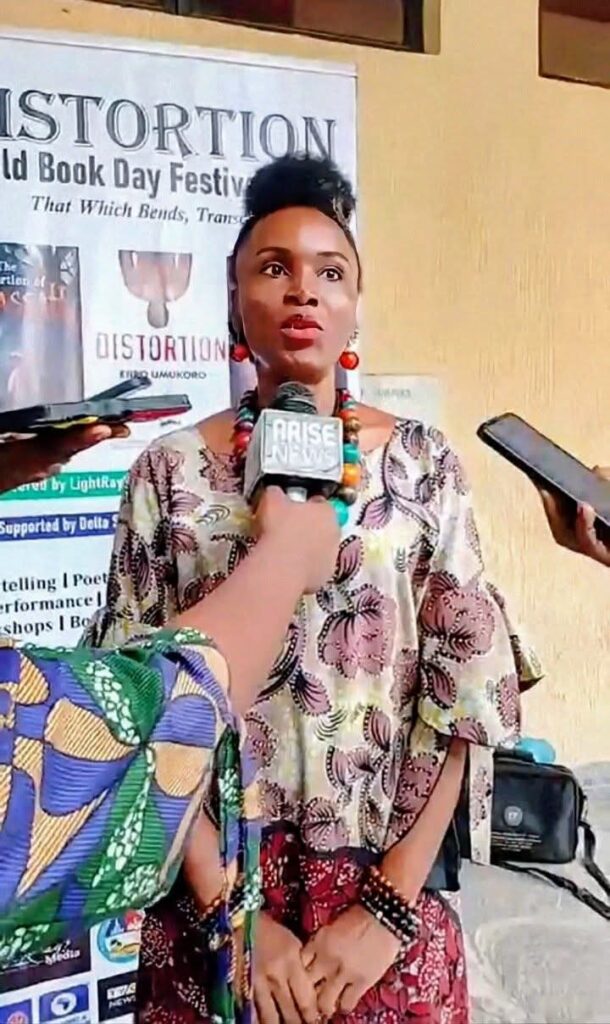
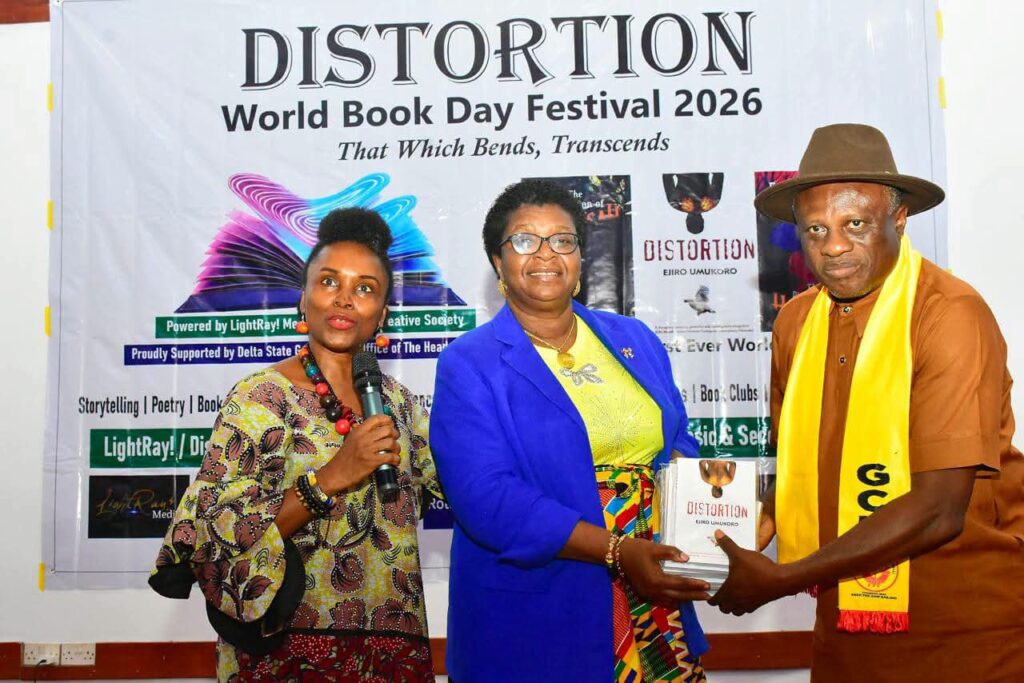
The hall at the Government House Press Centre in Asaba was filled with poetry, storytelling, applause, and difficult conversations that many young Nigerians rarely get the opportunity to have openly.
Students stood before an audience of educators, lawyers, librarians, government officials, and advocates to speak about creativity, emotional health, violence, leadership, reading culture, and the future they hope to inherit.
Some performed spoken-word poetry. Others debated social issues, presented stage dramas, and shared deeply personal reflections about growing up in a society where many young people feel unheard.
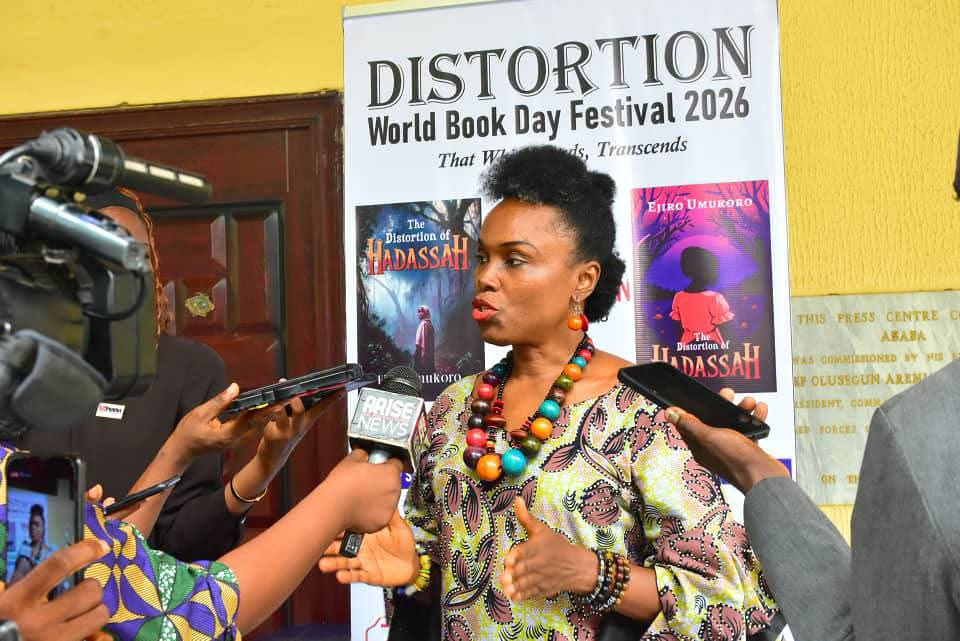
At the centre of it all stood Lady Ejiro Umukoro, a multi award winning investigative storyteller, author of the acclaimed DISTORTION series, and founder of Project ECHO Chamber, a new youth-focused initiative designed to amplify the voices of Nigerian students through literature, dialogue, creativity, and civic engagement.
For Umukoro, the event was more than a literary gathering. It was a call for cultural and social awakening.
“This is about making young people visible,” she said during the launch of the LightRay!/DISTORTION Orientation Literary Festival, the first student literary and creative festival of its kind in Delta State.
“I am a storyteller, but I am also an investigator of stories,” she said. “And one of the stories we continue to ignore in Nigeria is the neglect of young people and their voices.”
Speaking passionately to students and guests, Umukoro said Nigerian youths remain among the most neglected and vulnerable groups in society despite being directly affected by government decisions and social realities.
According to her, exclusion is evident in policy implementation, legislation, and even budget allocations for education and child welfare.
“When you compare education budgets with recurrent expenditure, it becomes clear that there is little genuine commitment to young people,” she said.
She reflected on childhood experiences shared by many Nigerians, growing up with opinions, ideas, and questions but lacking spaces where adults genuinely listened.
“We were all children once,” she said. “Every child wants to feel heard. Children want to contribute ideas, challenge systems, and tell adults when things need to be done differently.”
That frustration, she explained, became the foundation for Project ECHO Chamber, a movement aimed at helping young Nigerians become active participants in shaping society rather than silent observers.

One of the most emotional moments of the festival came during a panel discussion on what organisers described as the “Boy-Man Crisis,” a conversation centred on emotional suppression among boys, toxic masculinity, and violence against women.
Umukoro argued that society has conditioned boys to disconnect from their emotions while encouraging harmful ideas about power and masculinity.
“We have built a society where boys are told not to express emotions,” she said. “Many grow up believing they must suppress pain, dominate others, and avoid vulnerability.”
According to her, those harmful expectations contribute to violence, emotional isolation, and unhealthy relationships.
She recalled experiences from interviews with international media organisations where conversations about violence against women often failed to attract empathy until the issue was framed around daughters.
“One painful reality we discovered was that many fathers only became concerned when discussions focused on their daughters,” she said. “Suddenly, it became personal.”
That experience, she said, reinforced the importance of teaching empathy and emotional intelligence to boys from an early age.
“When people cannot emotionally relate to something, they rarely protect it,” she added.
The discussion featured contributions from Ijeoma Nwanze, Florence Ogonegu, and Maduemezia Azuka Paul, who addressed issues ranging from relationships and accountability to emotional maturity and leadership.
Nwanze encouraged students to understand the values and principles that guide healthy relationships and responsible living.
“There is a difference between relationships and responsibilities,” she told the students. “Young people must understand the principles that shape healthy lives and successful relationships.”
The audience became especially attentive when legal practitioner Maduemezia Azuka Paul responded to a student’s question about money, success, and societal pressure.
“At 17, your life should not revolve around money,” he said. “Success is not defined by the amount of money in your pocket.”

He warned students against becoming consumed by social media lifestyles, internet pressure, and the growing obsession with quick wealth.
“Young people are constantly exposed to images of success that are not always real,” he said. “But lasting success is built through ideas, skills, discipline, and patience.”
He urged students to focus on education, creativity, and innovation rather than shortcuts.
“People build wealth from ideas,” he added. “Use your mind, your creativity, and your skills. Don’t destroy your future chasing temporary trends.”
His remarks resonated strongly with students, many of whom later described the session as one of the most impactful moments of the event.
Paul also challenged harmful stereotypes surrounding masculinity.
“We wrongly teach boys that men should not cry or express emotions,” he said. “That is unhealthy because men are human beings too.”
The festival itself was inspired by Umukoro’s DISTORTION novel series, particularly The Distortion of Hadassah, which won a Young Adult Literature Prize last year.
The books explore themes including mental health, gender-based violence, discrimination, identity, career development, and harmful traditional practices.
According to Umukoro, the novels have sparked conversations far beyond literary circles.
One example she cited was the growing movement against the Osu caste system in parts of Imo State.
She referenced a public declaration in Oguta Community where traditional rulers, lawmakers, NGOs, and residents openly rejected the discriminatory practice.
“People had lived in fear and silence for years,” she said. “But eventually the community came together and declared that the discrimination must end.”
She described the caste system as “worse than racism” and argued that societies cannot claim to oppose discrimination while tolerating systems that dehumanise people internally.
Beyond storytelling and social reform, another issue dominated conversations throughout the festival, the deteriorating state of libraries and reading culture in Delta State.
Umukoro described the situation as deeply disturbing, noting that despite Delta’s economic strength, only a small number of public libraries remain fully functional.
“We have more than 20 libraries in Delta State, but only about nine are functioning properly,” she said. “Many are abandoned, neglected, or outdated.”
She criticised the alleged diversion of funds allocated to libraries and warned that neglecting educational infrastructure would have long-term consequences for society.
“Libraries are repositories of civilisation, knowledge, and memory,” she said. “Without literature, societies gradually lose identity.”
She also expressed concern about the growing social isolation among young people caused by excessive dependence on phones and social media.
“Children are becoming disconnected from one another,” she said. “Libraries and book clubs can help rebuild human interaction and community.”
According to her, many young people now spend more time online than engaging in meaningful conversations with peers.
“When people do not learn to connect with one another from an early age, it affects relationships, communication, and society as a whole,” she said.
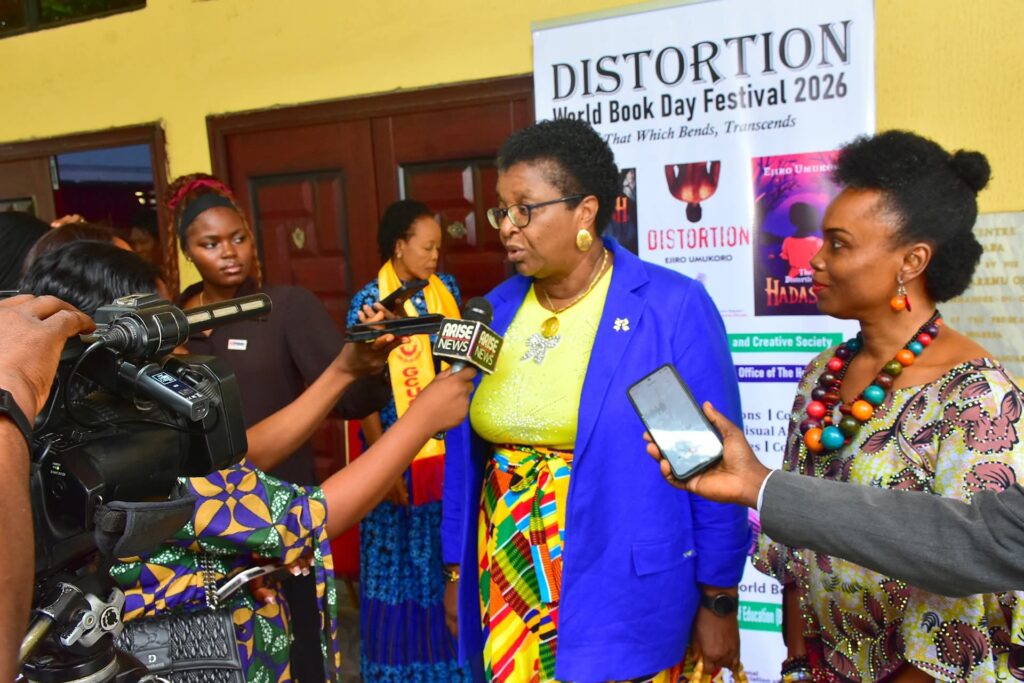
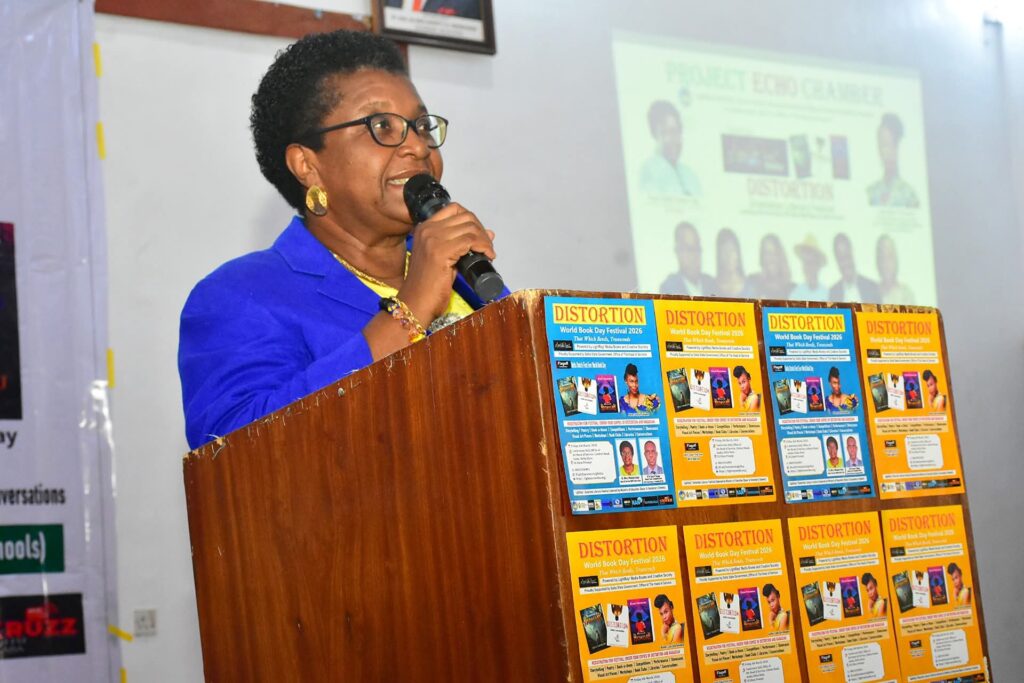
Delta State Head of Service, Dr. Mininim Oseji, praised the initiative and described the students’ performances as inspiring.
“The eloquence, creativity, confidence, and storytelling displayed by these students are remarkable,” she said.
She encouraged schools across the state to establish book clubs and called for renewed investment in libraries and reading culture.
“There is hope if we continue to nurture the talents of young people,” she added.
President of LiTACO, Dr. Awele Ilusanmi, also stressed the importance of modern libraries in sustaining creativity and learning.
“Libraries must become active learning hubs where students can research, create, debate ideas, and express themselves freely,” she said.
Child safety advocate Ndidi Taiwo-Ojo described Project ECHO Chamber as an important platform for creating safe spaces where young people can speak without fear.
Representing the National Association of Seadogs (Pyrates Confraternity), Tony Edemenaha said the DISTORTION series forces society to confront uncomfortable truths.
“For too long, we have normalised distortions of culture, justice, and values,” he said. “Literature becomes evidence, and classrooms become spaces for accountability.”
He described the festival as “an intervention rather than just an event.”
For many students, the festival became more than a literary programme. It became a moment of personal discovery.
Uka Nzugbechukwu Divine, an SS1 student of Faith Academy said the event taught her the importance of self-worth, creativity, and believing in her abilities.
Another participant, Obodechine Goodluck of Asaba Mixed Secondary School, said the discussion on masculinity encouraged him to express his emotions openly rather than suppress them.
Bemigho Esther of God’s Heritage International School described the programme as transformative.
“I’ve never attended an event like this before,” she said. “I learned the importance of reading, joining book clubs, and developing meaningful interactions with others.”

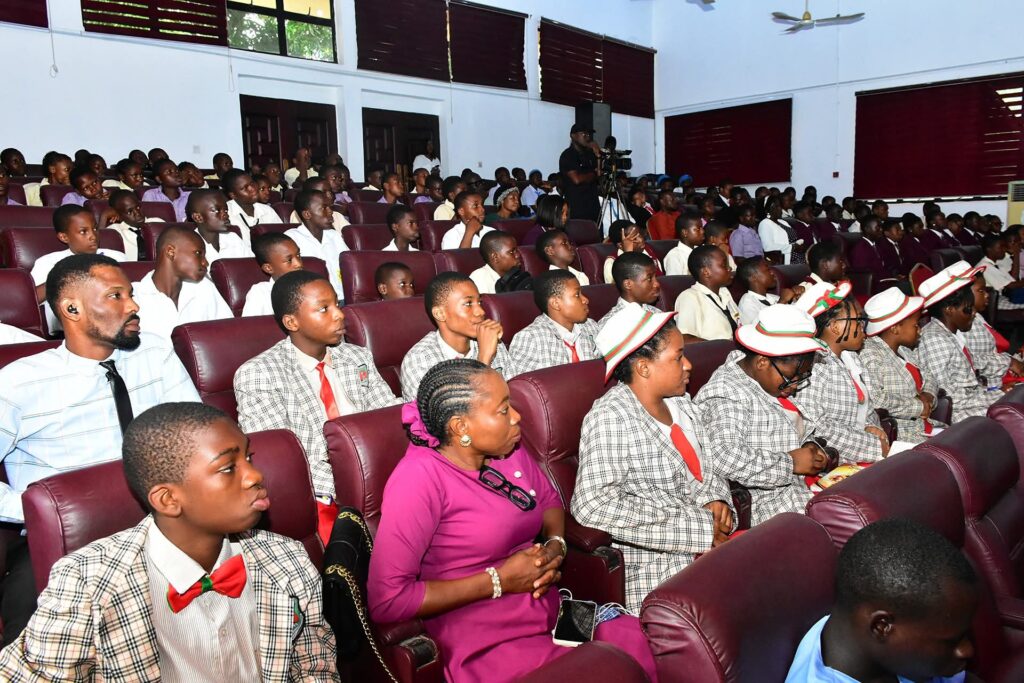
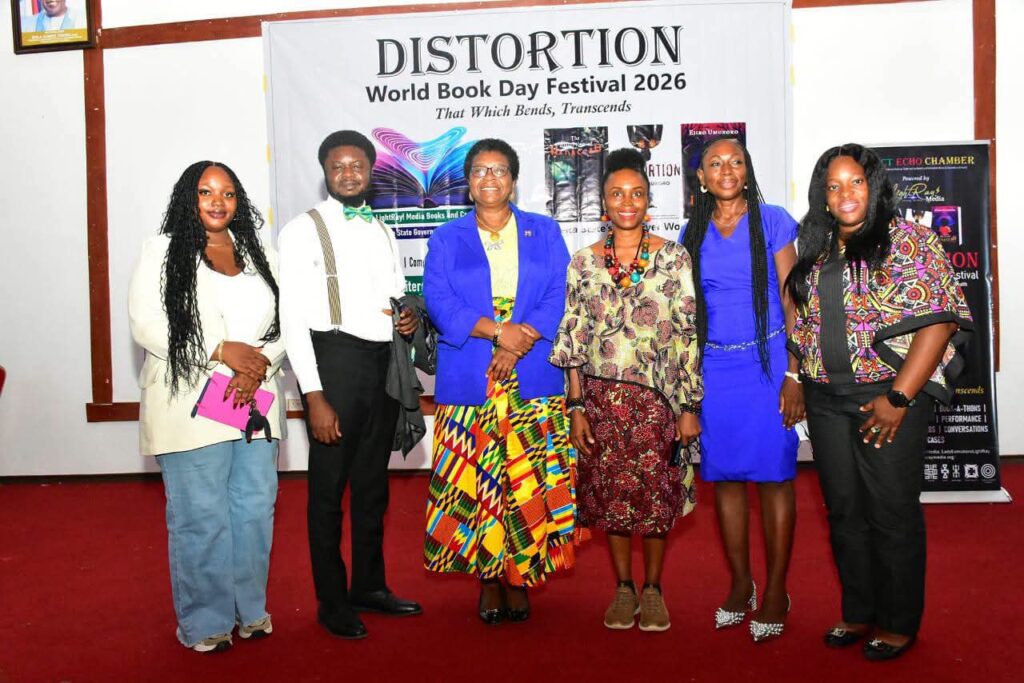
The event concluded with students reciting the ECHO Chamber pledge, a commitment to truth, creativity, growth, courage, and community building.
For Lady Umukoro, however, the festival represents only the beginning of a much larger movement.
Through Project ECHO Chamber, she hopes to raise a generation of young Nigerians who are not merely consumers of information but creators of ideas capable of transforming society.
“We want to distort the silence around young voices,” she said. “This is their time.”
By Douba Post