By ENITAN ABEL JOHNGOLD
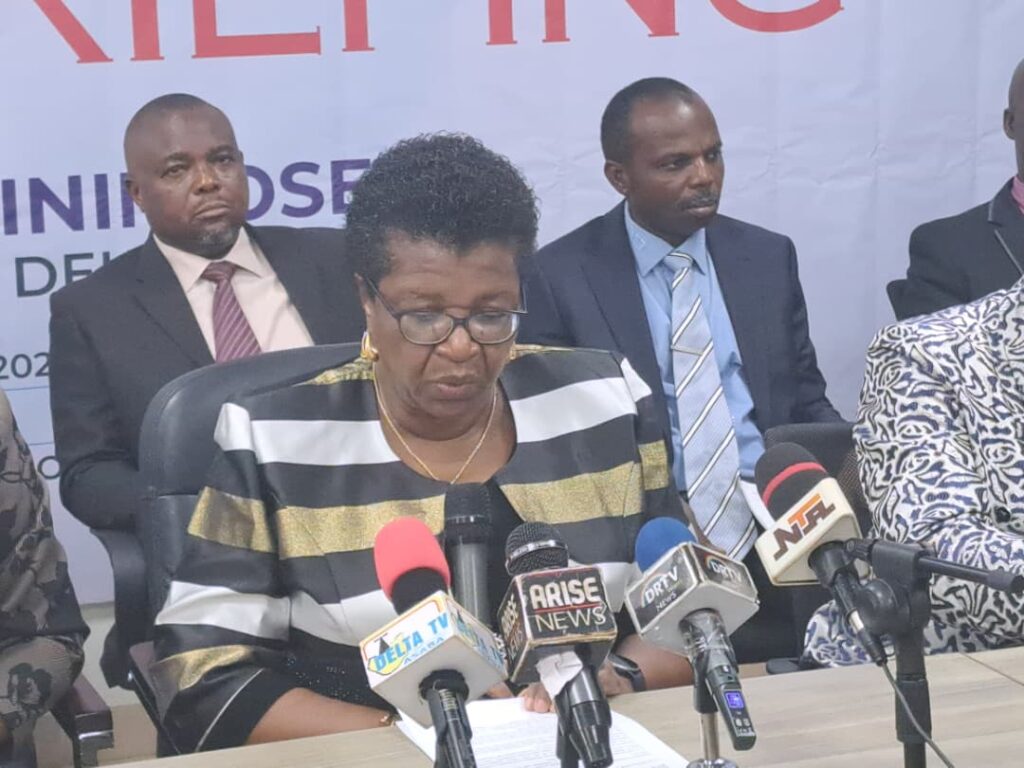
The Delta State Civil Service has embarked on an ambitious journey towards digital transformation, institutional strengthening and improved service delivery, with the Head of Service, Dr. (Mrs.) Mininim I. Oseji, unveiling an array of reforms and achievements aimed at repositioning the public service for greater efficiency and productivity.
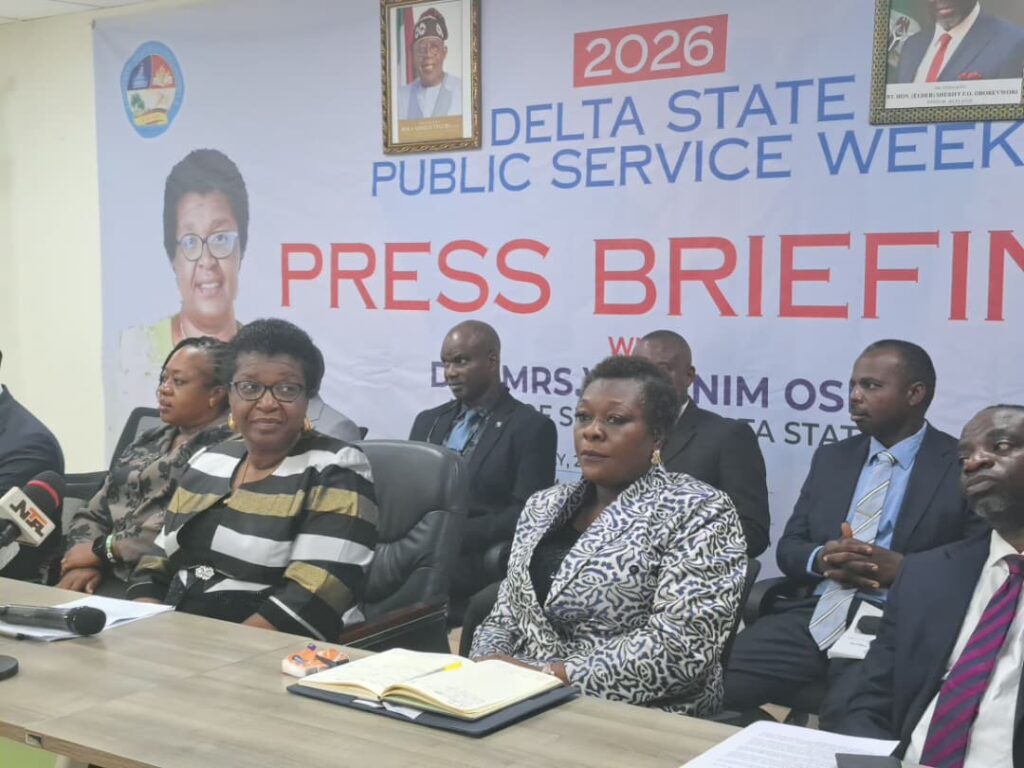
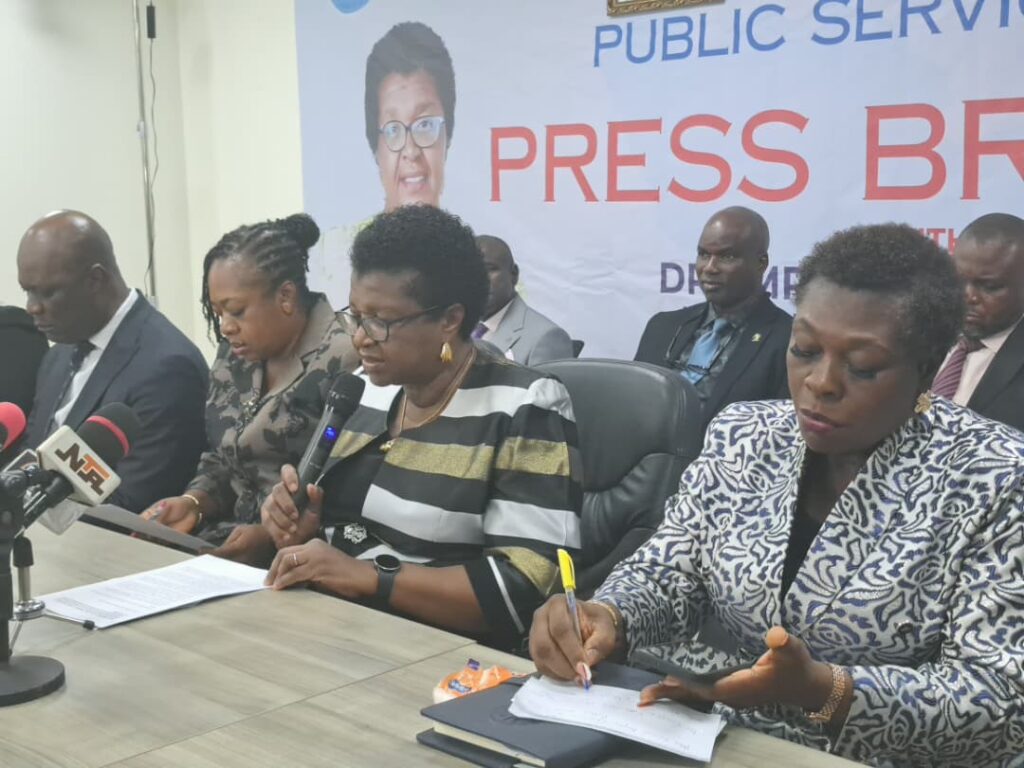
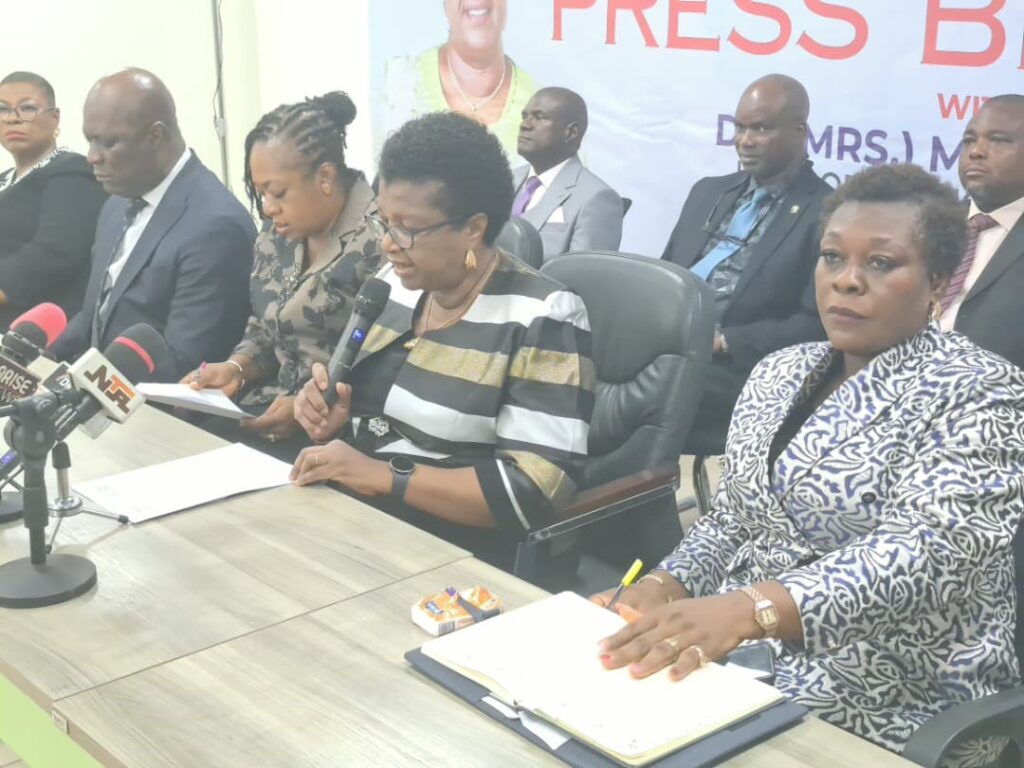
Speaking during a press briefing held at the Conference Hall of the Ministry of Information, Asaba, on Monday, Dr. Oseji formally announced activities lined up for the 2026 Civil Service Week Celebration, themed “Reforms, Resilience and Results.”
She described the annual event as an opportunity for reflection, evaluation and renewed commitment to the ideals of professionalism, accountability, patriotism, integrity, innovation and service excellence in public administration.
According to the Head of Service, the theme underscores the determination of the Delta State Public Service to build a resilient workforce capable of delivering measurable results while adapting to emerging challenges in governance.
“We are taking deliberate steps to strengthen our institutions, equip our personnel and modernize our service processes. This includes enhancing digital infrastructure, deepening inter-agency collaboration and promoting meritocracy and inclusiveness across the civil service structure,” she stated.
Celebrating Excellence and Service
Dr. Oseji disclosed that the week-long celebration would feature a public lecture, public service quiz competition, dinner and award night, football competitions, golf tournaments and other indoor games designed to boost morale, encourage healthy competition and reward excellence among civil servants.
She emphasized that the celebration goes beyond ceremonial activities, noting that it provides an avenue to recognize outstanding civil servants, celebrate institutional achievements and unveil innovative frameworks that will make the public service more adaptive and future-ready.
“The public service remains the engine room of government. Whether in education, healthcare, environmental management or economic planning, civil servants remain central to the implementation of government policies and programmes,” she added.
Reviving Dormant Traditions
Highlighting developments since assuming office 14 months ago, Dr. Oseji distinguished between initiatives that were revived and those newly introduced under her administration.
Among the programmes reactivated were the publication of The Bureaucrat magazine, Civil Service Week celebrations, Breakfast Dialogue sessions, courtesy visits by retiring Permanent Secretaries, the revised dress code policy and the reintroduction of time books to monitor punctuality and attendance.
Observers say these measures have helped restore discipline, strengthen institutional culture and improve communication within the state public service.
Digital Revolution Takes Centre Stage
A major highlight of Dr. Oseji’s stewardship has been the aggressive push towards digitalization.
She revealed that her office had implemented a comprehensive digital training programme involving master trainers and trainers-of-trainers, virtual learning platforms, social media engagement and the use of Google Forms for performance assessment.
To further drive the digital agenda, the Office of the Head of Service established a pilot Information and Communication
Technology (ICT) Hub that will eventually be replicated across ministries, government offices and local government headquarters.
The initiative, she explained, forms part of a broader vision to build a technology-driven public service capable of meeting the demands of modern governance.
Staff Welfare Receives Boost
In a move aimed at easing transportation challenges faced by workers, the Office of the Head of Service introduced a Staff Transport Support Scheme utilizing a 30-seater Coaster bus and a 12-seater Peugeot Expert bus.
The buses currently serve civil servants commuting along the Okpanam, Abraka Junction and Ugbolu corridors.
Dr. Oseji urged other government establishments with available transport facilities to emulate the initiative in order to improve staff welfare and productivity.
Building Capacity Beyond Traditional Training
The Head of Service also highlighted several innovative capacity-building programmes introduced under her administration.
These include trainings on digital governance, drip irrigation farming, autism awareness, workplace etiquette, attitudinal change, grant writing, scholarship opportunities, estate management, research ethics, financial literacy, event planning and video content creation.
She disclosed that the office had also facilitated financial counselling sessions for staff and encouraged in-house training programmes across ministries and departments.
Additionally, volunteers from the Nigerian National Volunteer Service have been engaged to support various public service initiatives.
Encouraging Agriculture and Innovation
Recognizing the economic realities confronting workers, Dr. Oseji said agricultural inputs had been distributed to civil servants to encourage farming and boost food security.
To further promote excellence and healthy competition, the Office of the Head of Service instituted a N200,000 award for the most effective department.
The maiden award was presented to the Department of Personnel Management (Senior Management) on April 10, 2026, marking her first anniversary in office.
Another N200,000 prize has been introduced for the Best Civil Servant Farmer, with the inaugural award scheduled for presentation during the Civil Service Week Dinner on June 30.
Towards a Delta Civil Service College
One of the administration’s most ambitious projects is the transformation of the Staff Training Centre into a world-class institution modeled after Singapore’s renowned Civil Service College.
Dr. Oseji said the vision is to establish a modern centre that combines digital learning, physical training facilities, ICT infrastructure and partnerships with reputable training organizations.
The initiative has already commenced with specialized courses on Digital Transformation and Electronic Records Management, Research and Statistical Systems for the M.O.R.E. Agenda, and Advanced Secretarial Duties and Office Administration.
She expressed confidence that the upgraded centre would emerge as a leading destination for 21st-century capacity building in Nigeria’s public sector.
Extending Reforms to Local Governments
The Head of Service further announced that civil service reforms are being cascaded to the local government level through collaboration with the Directorate of Local Government Affairs and the Local Government Service Commission.
According to her, the initiative is designed to ensure uniformity, efficiency and improved service delivery across all tiers of governance in Delta State.
Commends Governor Oborevwori
Dr. Oseji used the occasion to express profound appreciation to the Governor of Delta State, Sheriff Oborevwori, for his support and commitment to public service reforms.
She credited the governor for providing the enabling environment that has allowed the Office of the Head of Service to implement its programmes successfully, including the timely approval and release of funds for the 2026 Civil Service Week celebration.
“From His Excellency, I have learnt the politics of good governance. It has strengthened my resolve to remain a voice for those who have no godfather or godmother to speak on their behalf,” she said.
The Head of Service also thanked Permanent Secretaries, directors, heads of ministries, departments and agencies, members of the Central Planning Committee and journalists for their support and contributions to the success of the public service reform agenda.
As Delta State celebrates Civil Service Week 2026, stakeholders believe the reforms initiated under Dr. Oseji’s leadership are laying the foundation for a more responsive, digitally driven and citizen-focused public service capable of delivering sustainable development and effective governance for the people of the state.