
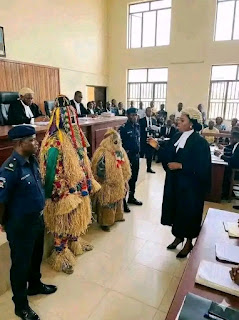
A High Court in Uyo, Akwa Ibom State, has reportedly awarded damages to a masquerade who was arrested by the state police for allegedly disturbing public peace during traditional worship rites.
A narrative which has since gone viral on social media disclosed that in a landmark ruling, the court sided with Mr. Effiong and his custodian, affirming that Ekpo, a recognised traditional religious practice in Akwa Ibom State, is protected under the law, and that its adherents are entitled to the fundamental rights guaranteed by the Constitution.
The judge held that Mr. Effiong’s arrest and detention violated his rights to personal liberty and freedom of religion.
The court ordered his immediate and unconditional release and directed the Akwa Ibom State Government to pay damages for the infringement of his fundamental human rights and freedom of worship.
Recall that the arrest of the Masquerade followed an executive order reportedly issued by the state governor, directing the Commissioner of Police to detain any masquerade seen performing during the Yuletide period.
Acting on this directive, a masquerade identified as Mr. Effiong, a practitioner of traditional worship, was arrested and subsequently charged to court.

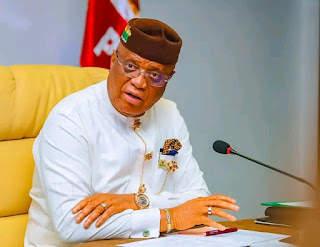
I ONLY BANNED MASQUERADE FROM STREETS NOT STATE, SAYS GOV ENO
Meanwhile, Governor Umo Eno has clarified the directive he signed regulating the appearance of Masquerades in Akwa Ibom State.
He wrote: “I signed an Executive Order banning masquerade activities on the streets and highways of Akwa Ibom State.
This decision was necessary to protect our people from the harassment, violence, and public disorder these activities have recently caused.
I fully respect our culture, but no cultural practice should endanger lives or disrupt public peace. If anyone wishes to display masquerades, it must be confined to village squares—not our streets, not our communities.
“I am not saying don’t play masquerade, but don’t use masquerade to disturb public peace. Restrict it to your village square.
“Even the law in 2022, as referred to by the State Attorney General, provides that if you must have to do that, you must seek clearance from the police. So if you want to play masquerade, go to your village square and play it, but not on the streets of Akwa Ibom.
“Don’t use that to disrupt public peace and order. We don’t want to have trouble on our hands.
“As we welcome thousands of visitors this Christmas season, we must show that Akwa Ibom is peaceful, orderly, and safe. I have directed security agencies to enforce this order across all 31 LGAs.
“We will continue to promote our rich culture and tourism, but never at the expense of public safety or human dignity.”– Governor Umo Eno, during the signing of an Executive Order banning the activities of masquerades on streets and highways across the State

GOVERNOR UMO ENO CLARIFIES EKPO MASQUERADE BAN SCOPE
Following widespread speculation and debate, Akwa Ibom State Governor, Pastor Umo Bassey Eno, has moved decisively to clarify the scope of the recent ban on Ekpo masquerade activities, confirming that the measure is not absolute but targets only public thoroughfares.
Ban Restricted to Streets and Highways Only
Governor Eno stressed that the ban is specifically on the presence of masquerades on the streets and highways of the state.
“I have not banned masquerades in the State. I only banned masquerades from the streets to stop them from continuing to be a threat to the lives of citizens and residents in the State,” the Governor stated.
Traditional Worship Remains Free, But Confined
The Governor confirmed that traditionalists who use the masquerade as a symbol of worship maintain their right to practice, provided it is done responsibly:
Allowed Areas: Traditionalists are free to worship their Ekpo religion within village squares or other confined communal areas.
Prohibition: Activities must not infringe upon the freedom of movement and safety of others.
Governor Eno concluded with a firm warning: “While everyone has the right to freedom of worship, no one should allow his or her freedom of worship to affect the freedom of movement of others. Otherwise, they will face the law and be prosecuted accordingly.”