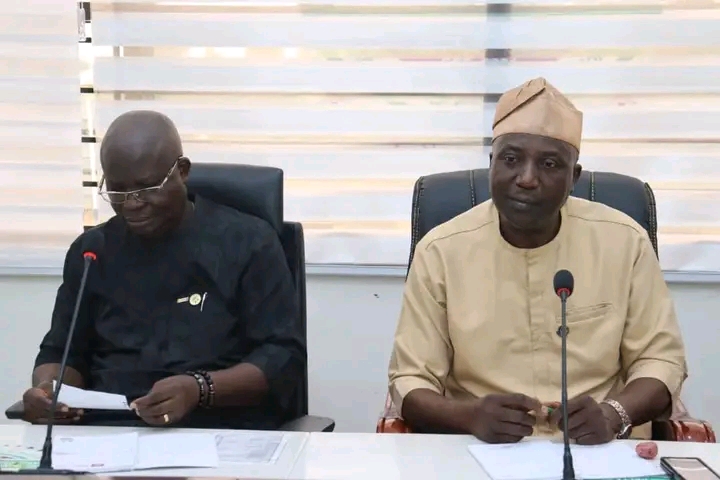
The Delta State Government has approved the construction of male and female hostels at the Dennis Osadebay University (DOU), Asaba, as part of efforts to strengthen infrastructure and improve students’ welfare in the institution.
Commissioner for Higher Education, Prof. Nyerhovwo Tonukari, disclosed this on Monday during a supervisory visit to the university, where he assessed its development, challenges and immediate needs.
Tonukari, who was accompanied by the Permanent Secretary in the ministry, Mrs Felicia Ronu-Orugboh, also charged the university management to intensify sensitisation among students on the Federal Government’s Nigerian Education Loan Fund (NELFUND) scheme.
He said the process for the award of contracts for the construction of the two hostels would commence shortly, stressing that the project was part of the state government’s commitment to providing conducive learning and living environments for students in its tertiary institutions.
The commissioner congratulated the newly appointed Vice-Chancellor, Prof. Samuel Ovuete Aghalino, and Registrar, Mrs Florence Nweke, on their appointments.
He also disclosed that Governor Sheriff Oborevwori had approved the constitution of a new Governing Council for the university.
Tonukari urged the university to leverage its agricultural potential by developing a flagship project capable of attracting national and international recognition.
He challenged the management to identify the institution’s areas of comparative advantage, particularly in agriculture, and transform them into distinctive programmes and projects that could enhance the university’s visibility while contributing to the socio-economic development of Delta State.
On student welfare, the commissioner directed the management to embark on aggressive awareness campaigns on the NELFUND student loan scheme, noting that DOU was among the institutions whose students could benefit from the programme.
According to him, the scheme provides financial assistance to eligible students towards tuition fees, in addition to a monthly stipend of N20,000, thereby reducing the financial burden on students and helping to prevent them from dropping out of school.
Tonukari described access to the scheme as an important opportunity for Nigerian students, urging the university authorities to ensure that eligible students were adequately informed about the application procedures and benefits.
He further assured the university management that issues raised during the visit, including its request for connection to the state-owned Independent Power Plant (IPP), would be presented to Governor Oborevwori for consideration and appropriate action.
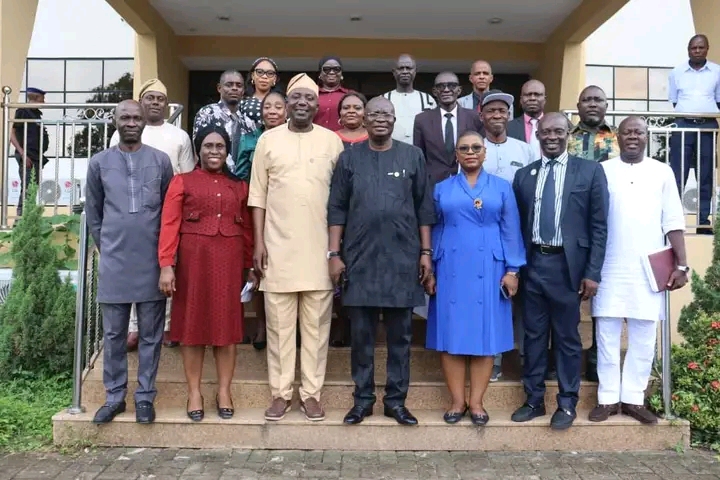
Earlier, the Vice-Chancellor, Prof. Samuel Aghalino, welcomed the commissioner and his team to the institution and expressed appreciation to the state government for its continued support.
Aghalino, who briefed the delegation on developments since his assumption of office, said his administration had taken steps to restore sanitation, discipline and orderliness across the university.
He disclosed that some official vehicles had also been refurbished and returned to service as part of efforts to improve the institution’s operational efficiency.
The Vice-Chancellor, however, identified the high cost of electricity as one of the university’s major challenges, revealing that the institution spends more than N18 million monthly on electricity.
He said stable power supply was particularly critical to departments such as Anatomy, where teaching, research and practical activities require uninterrupted electricity.
Aghalino therefore appealed to the state government to facilitate the university’s connection to the state IPP, saying the move would substantially reduce its energy expenditure and enable the institution to redirect scarce resources towards teaching, research and other academic priorities.
He expressed appreciation to Governor Oborevwori for the administration’s interventions in the university and appealed for sustained government support to enable the institution overcome its challenges and effectively fulfil its academic mandate.