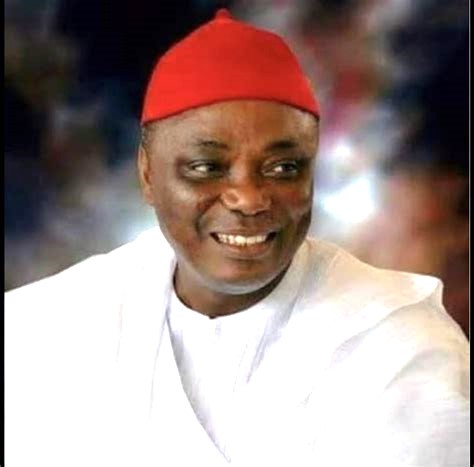
For two days, I remained indoors—thinking, reading, listening. My phone rang endlessly, each vibration another reminder of a reality I struggled to accept. Everywhere I turned—on social media, on television, even on foreign news channels—the same image confronted me: my boss, my leader, the unmistakable voice of Anioma, Senator Peter Onyelukachukwu Nwaoboshi, was gone.
It felt as though my world was closing in. I switched off my phone because I could no longer bear the steady flow of condolence calls and messages. I thought silence might help me breathe. But even in silence, the questions screamed louder.
Who will speak for Igbuzo, Oshimili North now?
Who will stand firm against the political tides of Delta Central and Delta South?
Who do we run to, politically, when storms arise?
I searched my thoughts and found no clear answer. Then I wept—not just for a man, but for my town, Ibusa (Igbuzo). What a monumental loss to a proud community whose political relevance was anchored by one towering figure.
Senator Nwaoboshi was more than a politician. He was the light, the voice, the shield, and the strength of Igbuzo politics. Anywhere you went, once you introduced yourself as being from Igbuzo, one name alone commanded instant recognition and respect: Nwaoboshi. His name opened doors, steadied negotiations, and commanded attention.
Is Igbuzo to fade politically without him?
How do we bear this loss?
“Nnam,” you left too early. You departed without preparing us for a future without your towering presence. You left dreams unfinished and hopes trembling. Yet who are we to question God? You were fearless when others were silent, courageous when others retreated. You stood to fight when many chose to flee. Now we feel like sheep without a shepherd—exposed and uncertain.
Not out of restraint, nor from lack of feeling, but because some losses demand distance before they permit meaning, I paused. Death announces itself loudly; understanding never does. So I watched Anioma mourn. I listened. I waited.
Then a phrase kept returning to me: “Our Iroko has fallen.”
An iroko does not fall quietly. Its fall alters the landscape. Its absence changes how the wind moves, how the ground bears weight, how smaller trees find direction.
Senator Peter Onyelukachukwu Nwaoboshi occupied that kind of space.
To the public, he was a seasoned and formidable politician—often debated, sometimes misunderstood. But to those of us who worked closely with him, his true strength lay in his method. He thought like a strategist and acted with the patience of a master tactician. He valued timing over noise, outcomes over applause, and substance over spectacle.
From him, I learned business acumen not as theory, but as lived practice—how influence is preserved, how decisions are weighed, and how leadership is exercised without drama. He taught without preaching and guided without coercion. Such mentorship rarely announces itself, but it endures long after the teacher is gone.
When I spoke with Pastor Idowu Okeze, his grief echoed ours: “This is Alili,” he said. “How can Igbuzo and the entire Anioma nation bear this? He was a father, a senior brother, and the clearest political mirror we had.”
Honourable Frank N. Esenwah, Member representing Oshimili North in the Delta State House of Assembly, described him as “a pillar” whose wisdom and commitment left an indelible mark on Delta State. Pillars are often unnoticed while standing; they are only truly seen when the weight they carried suddenly has nowhere to rest.
Hon. Austin Nnabuife captured it plainly when he observed that Senator Nwaoboshi’s passing has created “a huge vacuum in Anioma land, Delta State, and Nigeria.” A vacuum is not merely an absence—it is the sudden realization of how much judgment, courage, and institutional memory once occupied that space.
This loss resists simplification.
Oshimili North feels it.
Ibusa feels it.
Anioma feels it.
Our Iroko has fallen.
And the land will never be quite the same again.
Nnam, oracle—good night till we meet again.
Omogwu Nnam.