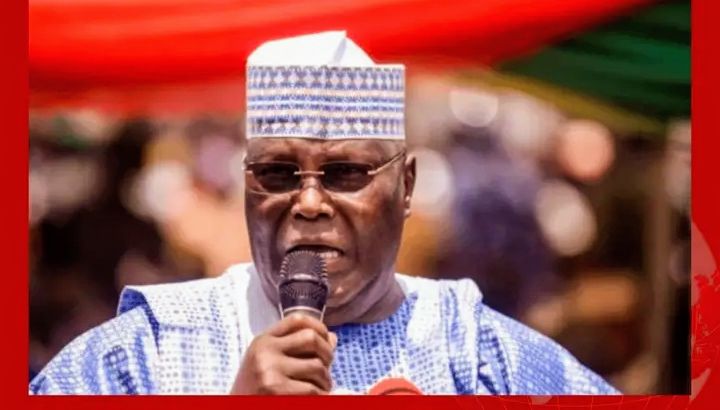
The African Democratic Congress (ADC) presidential screening exercise, held at the Transcorp Hilton in Abuja, marked a significant milestone in the opposition party’s preparations for the 2027 general elections.
Former Vice President Atiku Abubakar presented a detailed economic rescue blueprint and security agenda, while former Transportation Minister Rotimi Amaechi made bold calls to abolish indigene-ship and federal character principles in favor of competence and citizenship.
The screening, chaired by former Cross River State Governor Liyel Imoke, cleared major aspirants including Atiku, Amaechi, and economist Mohammed Hayatu-Deen, paving the way for the party’s primaries scheduled for May 25.
The event comes amid reported internal tensions over consensus attempts and zoning, following earlier postponements.
Atiku Abubakar, a perennial presidential contender, used the platform to outline what his team described as a “comprehensive economic rescue blueprint” and national security reform agenda.
In a statement issued by his Senior Special Assistant on Public Communication, Phrank Shaibu, Atiku framed the exercise as more than a formality it was an opportunity to present practical solutions to Nigeria’s intertwined crises of economic stagnation, unemployment, institutional decay, and widespread insecurity.
Key pillars of Atiku’s plan reportedly include:
- Job Creation and Private Sector-Led Growth: Emphasis on expanding the private sector through incentives, reduced bureaucratic hurdles, and policies to unlock investment.
- Fiscal Discipline and Macroeconomic Stability: Measures to restore investor confidence, stabilize the economy, and address fiscal imbalances.
- Targeted Interventions: Proposals such as a potential $10 billion economic stimulus fund for micro, small, and medium enterprises (MSMEs), aimed at broad-based, competitive growth with ambitions to significantly boost GDP.
- Security Reforms: A comprehensive action plan to tackle terrorism, kidnapping, banditry, and other threats that have left citizens vulnerable.
Atiku described his vision as transcending party lines, positioning it as an urgent pathway to rescue Nigeria from current hardships.
He has consistently highlighted experience and coalition-building as strengths, though the party faces challenges in unifying behind a single candidate.
The former Vice President submitted his nomination forms earlier in May alongside other aspirants, signaling a determined push for the ADC ticket.
Rotimi Amaechi, who also underwent screening, delivered one of the most striking interventions by calling for the abolition of indigene-ship and federal character principles.
He argued that these policies, intended to promote equity, have instead entrenched mediocrity and identity-based politics at the expense of competence and performance.
Speaking during or around the screening process, Amaechi emphasized that the 2027 election should prioritize “competence, experience, and performance” over ethnic, regional, or sentimental considerations.
He criticized what he termed the “Emilokan” (it is our turn) mentality, linking it directly to Nigeria’s current suffering.
Amaechi has been vocal in rejecting any notion of serving as a running mate, particularly to Atiku. “I didn’t buy the ADC presidential form to become Vice President to anybody,” he stated firmly, dismissing speculation of a joint ticket.
He insists on an open, transparent primary if consensus fails, asserting his own electability based on track records in governance and infrastructure delivery.
His stance underscores deeper fault lines within the ADC coalition, where ambitions and perceptions of zoning or favoritism have created friction.
Amaechi has previously expressed confidence that Atiku, despite winning past primaries, has struggled to convert them into general election victories.
The ADC, which has positioned itself as a major opposition force through mergers and defections, is navigating a delicate phase.
Party Chairman Senator David Mark has called for unity to mount a credible challenge against the ruling All Progressives Congress (APC) and President Bola Tinubu in 2027.
However, reports of deadlock over consensus, walkouts, and competing ambitions particularly between northern and southern interests have raised questions about cohesion.
The screening proceeded despite an earlier postponement linked to these dynamics and security concerns in parts of the north.
No official cleared list has been released yet, but aspirants who participated are advancing toward the primaries.