ADC REPLIES APC: WE ARE NOT INCITING NIGERIANS, WE ARE ONLY SPEAKING FOR THEM
- Cites nearly 500 percent fuel price surge, and 100 percent food import increase since May 2023
The African Democratic Congress (ADC) has pushed back against the All Progressives Congress (APC) over its defence of President Bola Tinubu’s economic reforms, which accused the opposition party of inciting Nigerians against the government.
In a statement signed by its National Publicity Secretary, Mallam Bolaji Abdullahi, the party rejected the accusation of incitement, insisting that the data showing Nigeria’s poverty rate has risen to 63 percent, up from about 50 percent before the removal of petrol subsidy, and the report showing that 93 percent of Nigerians believe the country is heading in the wrong direction are not opposition talking points, but publicly available reports that highlight the human cost of the administration’s economic policies and reflect the views of ordinary Nigerians who are living in hell under the APC government.
Dear APC,
We are not inciting Nigerians, we are only speaking for them.
- 63% of Nigerians are now in poverty under your government.
- 93% say Nigeria is on the wrong path.
- 88% say the economy is bad.
- 74% say their living conditions are poor.
- Fuel prices have surged by nearly 500%, from about N255 per litre in May 2023 to around N1,500 today.
- 90 of Nigeria’s 150 rice mills have shut down since May 2023, putting thousands of smallholder farmers out of business.
These are not opposition talking points. They are facts.
We dare you to refute them.
The full statement read:
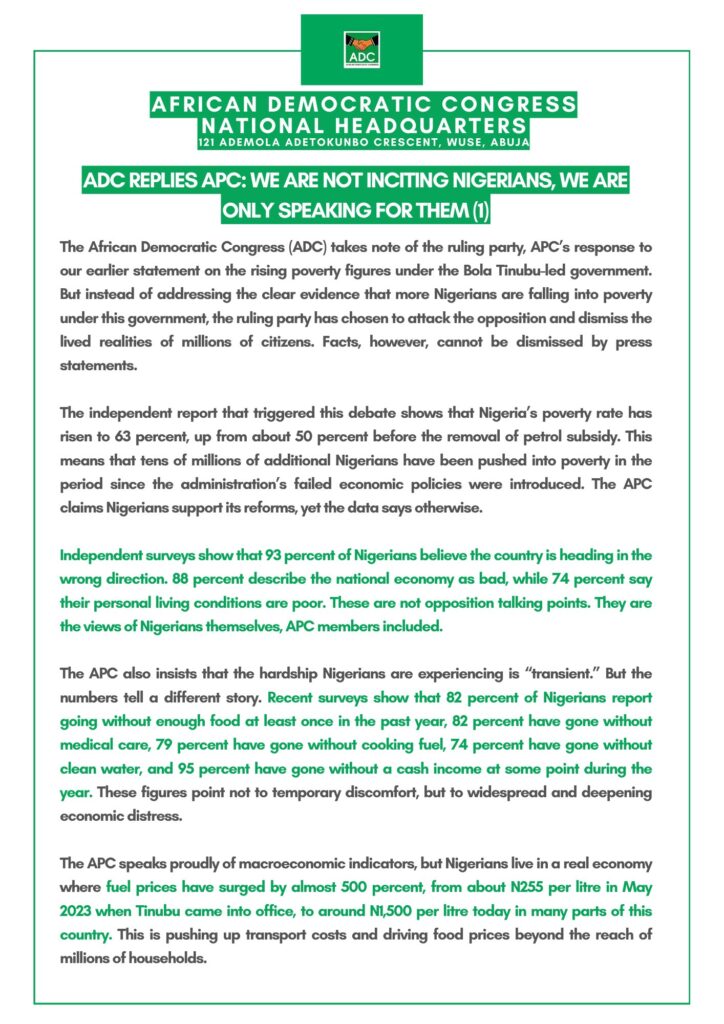
The African Democratic Congress (ADC) takes note of the ruling party, APC’s response to our earlier statement on the rising poverty figures under the Bola Tinubu-led government. But instead of addressing the clear evidence that more Nigerians are falling into poverty under this government, the ruling party has chosen to attack the opposition and dismiss the lived realities of millions of citizens. Facts, however, cannot be dismissed by press statements.
The independent report that triggered this debate shows that Nigeria’s poverty rate has risen to 63 percent, up from about 50 percent before the removal of petrol subsidy. This means that tens of millions of additional Nigerians have been pushed into poverty in the period since the administration’s failed economic policies were introduced. The APC claims Nigerians support its reforms, yet the data says otherwise.
Independent surveys show that 93 percent of Nigerians believe the country is heading in the wrong direction. Eighty-eight percent describe the national economy as bad, while 74 percent say their personal living conditions are poor. These are not opposition talking points. They are the views of Nigerians themselves, APC members included.
The APC also insists that the hardship Nigerians are experiencing is “transient.” But the numbers tell a different story. Recent surveys show that 82 percent of Nigerians report going without enough food at least once in the past year, 82 percent have gone without medical care, 79 percent have gone without cooking fuel, 74 percent have gone without clean water, and 95 percent have gone without a cash income at some point during the year. These figures point not to temporary discomfort, but to widespread and deepening economic distress.
The APC speaks proudly of macroeconomic indicators, but Nigerians live in a real economy where fuel prices have surged by almost 500 percent, from about N255 per litre in May 2023 when Tinubu came into office, to around N1,500 per litre today in many parts of this country. This is pushing up transport costs and driving food prices beyond the reach of millions of households.
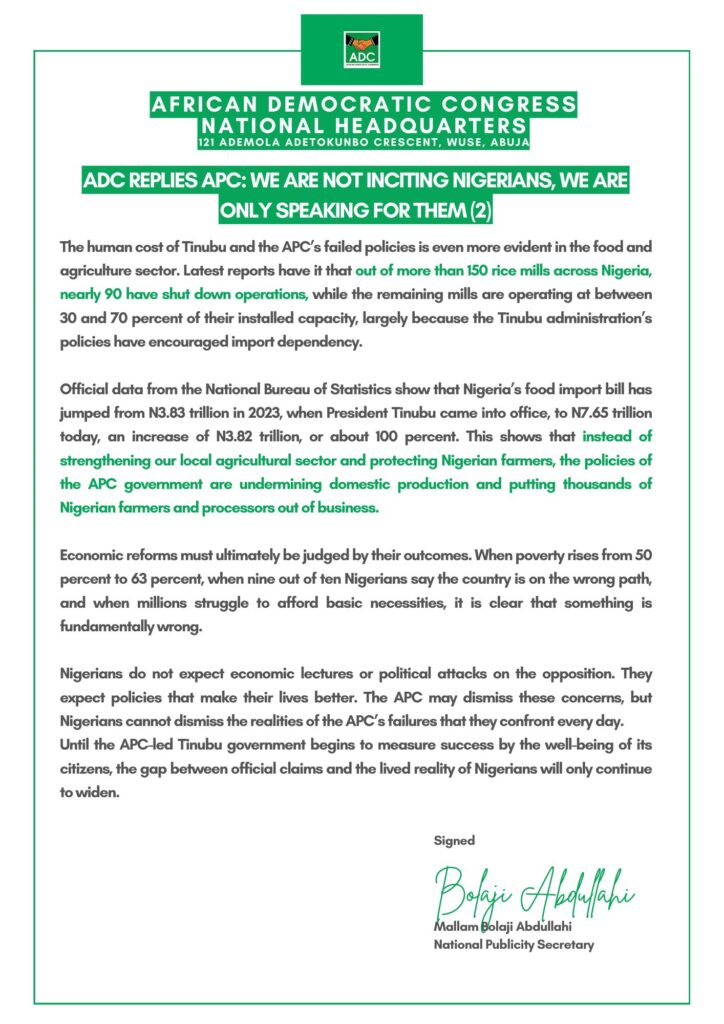
The APC claims that the money previously spent on fuel subsidy, which should amount to roughly N6.4 trillion in savings last year alone, is now being redirected to “vital sectors” such as healthcare and social development. However, it is on record that only N36 million, just about 0.02 percent of the capital budget, was actually released for capital projects in 2025 for Nigeria’s entire federal healthcare sector. Nigerians are therefore left to ask a simple question: if the subsidy savings are truly being redirected to critical sectors, where exactly is all the money going? Why are local contractors not paid? Why are the universities still poorly equipped?